

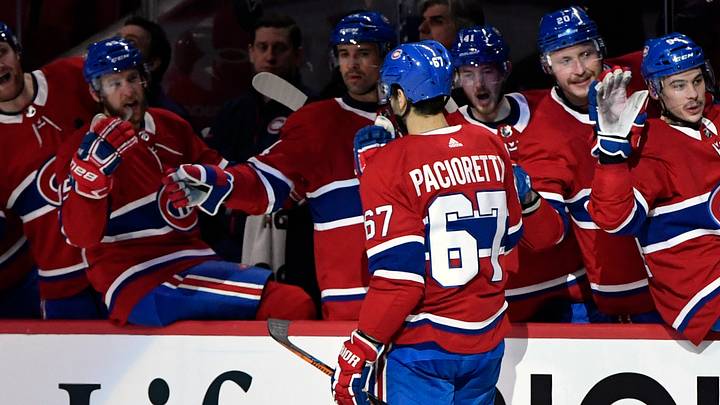
The Montreal Canadiens scored the sixth-most goals in the NHL last season while possessing two of the league's more offensively gifted players. Cole Caufield was the first Canadiens player to reach the 50-goal mark since 1990, while his linemate, Nick Suzuki, was the first to reach 100 points since 1986. For years, the Canadiens were built from the defence out, with Carey Price as the deciding factor in whether the team would win or lose. The Canadiens teams in the 2010s were not littered with goalscorers, but they did have one, Max Pacioretty, and they failed to give him any support. Despite the lack of talent around him, Pacioretty still managed five 30-goal seasons in Montreal, but when the team struggled for goals, he took the brunt of the criticism.
Pacioretty became an elite goalscorer with little help
Pacioretty joined the Canadiens in their star-studded 2007 draft class that also included P.K. Subban and Ryan McDonagh. Pacioretty struggled early in his Canadiens career, recording just six goals in 86 games over his first two seasons. He split time between the Canadiens and their AHL affiliate, the Hamilton Bulldogs, but finally found his stride during the 2010-11 season. After starting the season with the Bulldogs, Pacioretty was recalled to the Canadiens and posted 14 goals in 37 games, which would be a 30-goal pace over an entire season. By the next season, Pacioretty was a regular in the Canadiens lineup, and he would continue that scoring pace, recording his first career 30-goal season, putting up 33 and adding 32 assists in 79 games. He was not the only Canadiens player to score 30 that season, as Erik Cole led the team in goals with 35, but that would not become a trend over the course of Pacioretty’s Canadiens career.
Following the shortened lockout season in 2012-13, Pacioretty recorded four straight 30+ goal seasons, scoring a career-high 39 in just 73 games in 2013-14. That season in particular showcased the scoring discrepancy in the Canadiens' roster, with the next-closest player in goals being Tomas Plekanec, who had 20. Unlike Caufield, Pacioretty did not have the luxury of playing with a star centreman like Suzuki. For the bulk of Pacioretty’s prime in Montreal, he was centred by David Desharnais, and while he had a couple of fine seasons with the Canadiens, he did not bring the production you would expect from your first-line centre. The Canadiens expected a lot from Pacioretty, and in 2015 they showed how much he meant to the franchise, naming him the 29th captain in franchise history. However, being named captain of one of hockey’s most illustrious franchises comes with a lot of pressure.
Pacioretty faced added pressure after becoming Canadiens captain
When Brian Gionta left the team after the 2013-14 season, there were many candidates to replace him. The obvious choice would have been Andrei Markov, but for years there was a notion that he did not want to have the C on his jersey. Tomas Plekanec also made a lot of sense, but the team’s management ultimately let the players decide, having a vote to see who would be the Canadiens next captain. Pacioretty received the most votes, and on September 18, 2015, he was named captain. Not only did he bear the responsibility of carrying the offensive workload, but he now had the added weight of trying to lead the Canadiens, which quickly soured some relationships. The Canadiens struggled in Pacioretty’s first season as captain, missing out on the playoffs. There were reports that tension was building between Pacioretty and Subban over his leadership approach. While both players denied having any problems with one another, it was clear that something was going on.
On June 29th 2016, the Canadiens shocked the hockey world. Montreal traded Norris Trophy-winning defenceman Subban to the Nashville Predators for Shea Weber. From the outside looking in, it appeared that the Canadiens chose Pacioretty’s side, and adding Weber gave Montreal another leader in the locker room, having been the Predators captain for six seasons. Despite the extra pressure to perform every night, Pacioretty’s production remained high, recording 30 and 35 goals after being named captain, but the third season is where things began to falter. The Canadiens struggled, missing the playoffs, and Pacioretty failed to hit the 30-goal plateau for the first time since the 2012-13 lockout-shortened season.
For years, Pacioretty was the Canadiens' most reliable offensive weapon. However, now, with one year left on his contract and a couple of poor seasons as a team, he became expendable, and Montreal capitalized while his value was still high. On September 10th 2018, the Canadiens pulled the trigger, trading their star sniper and captain to the Vegas Golden Knights for Tomas Tatar, Suzuki and a second-round pick. It is quite ironic that throughout Pacioretty’s career with the Canadiens, he never had the chance to play with an elite centreman, but by trading him, the team found their next star centre. Acquiring Suzuki helped accelerate the Canadiens rebuild, giving the franchise a player they could build around, someone who would eventually get the C himself. Pacioretty never got the help he deserved while he was in Montreal, but he is a big part of why the Canadiens are where they are today.
 Add us as a preferred source on Google